
"Argentine heritage"
1280 article(s) found

Know Taipei in the aroma of coffee
If you take a closer look, you will find that apart from 7-ELEVEN, Family, Laierfu and other community convenience stores, the cafes with the largest number of streets and alleys in Taipei are large and small.

How to wash coffee beans by hand at Manor Kaduai in Panama _ Kaduai washing parameters
Professional coffee knowledge exchange more coffee bean information please follow the coffee workshop (Wechat official account cafe_style) Panamanian Coffee-Boquete Volcano Finca Lavalentina Manor Kaduai seed washing treatment Baru Volcano (Bharu) Manor (Finca Lavalentina)
Coffee Culture Coffee fragrance knows Taipei
Scholars and scholars like to express their daily whereabouts in such a sentence: I am not at home, I am there; not at home, on my way. In Taipei, this is not a library, not gallery, not a bookstore, not a bar, but must be a coffee shop. If you look carefully, you will find that the largest number of streets and alleys in Taipei are in addition to 7ELEVEN, Family, Laierfu and other neighborhoods.

Yega Xuefi (yirgacheffe) and Harald (harrar)
Yirgacheffe and Harald (harrar), friends who know coffee must be familiar with it. Although they all come from Ethiopia, they have very different styles due to differences in regional microclimate and different treatment methods. Sheffield has a vibrant lightness and playfulness, while Harald has a profound heritage and appears to be mature and calm.

Yega Xuefi (yirgacheffe) and Harald (harrar)
Yirgacheffe and Harald (harrar), friends who know coffee must be familiar with it. Although they all come from Ethiopia, they have very different styles due to differences in regional microclimate and different treatment methods. Sheffield has a vibrant lightness and playfulness, while Harald has a profound heritage and appears to be mature and calm.
Yega Xuefei and Harald
Yirgacheffe and Harald (harrar), friends who know coffee must be familiar with it. Although they all come from Ethiopia, they have very different styles due to differences in regional microclimate and different treatment methods. Sheffield has a vibrant lightness and playfulness, while Harald has a profound heritage and appears to be mature and calm.
Beautiful women and skillful women from Ethiopia, Yega Xuefei and Harald
Yirgacheffe and Harald (harrar), friends who know coffee must be familiar with it. Although they all come from Ethiopia, they have very different styles due to differences in regional microclimate and different treatment methods. Sheffield has a vibrant lightness and playfulness, while Harald has a profound heritage and appears to be mature and calm.
Coffee producing areas in Cuba
The establishment of the earliest seven coffee plantation sites, including Raglan Piedra, Elkovre, El Salvador and Nisto Perez, are listed as World Cultural Heritage. The seven coffee plantations were reclaimed in the 19th century on virgin land in the foothills of Maestra (postcard in figure 17) in the southeastern provinces of Santiago and Guantanamo. Coffee production in Cuba: Cuba (Cuba)

Boutique coffee beans yirgacheffe and Harald harrar
Yirgacheffe and Harald (harrar), friends who know coffee must be familiar with it. Although they all come from Ethiopia, they have very different styles due to differences in regional microclimate and different treatment methods. Sheffield has a vibrant lightness and playfulness, while Harald has a profound heritage and appears to be mature and calm.

Boutique coffee beans yirgacheffe and Harald harrar
Yirgacheffe and Harald (harrar), friends who know coffee must be familiar with it. Although they all come from Ethiopia, they have very different styles due to differences in regional microclimate and different treatment methods. Sheffield has a vibrant lightness and playfulness, while Harald has a profound heritage and appears to be mature and calm.

Boutique coffee beans Yega Xuefei and Harald
Yirgacheffe and Harald (harrar), friends who know coffee must be familiar with it. Although they all come from Ethiopia, they have very different styles due to differences in regional microclimate and different treatment methods. Sheffield has a vibrant lightness and playfulness, while Harald has a profound heritage and appears to be mature and calm.
Basic knowledge of boutique coffee Cuban coffee
According to records, there were 2067 coffee plantations in Cuba in 1833. Among them, the earliest seven coffee plantation sites, such as Raglan Piedra, Elkovre, El Salvador and Nisto Perez, are listed as World Cultural Heritage. These seven coffee plantations are located in the foothills of Maestra in the provinces of Santiago and Guantanamo in southeastern Cuba in the 19th century (figure 17 is a postcard).

Coffee flavors from different coffee producing areas around the world Coffee production in Cuba
Cuba recorded that there were 2067 coffee plantations in Cuba in 1833. Among them, the earliest seven coffee plantation sites, such as Raglan Piedra, Elkovre, El Salvador and Nisto Perez, are listed as World Cultural Heritage. The seven coffee plantations are the foothills of the Maestra Mountains in the provinces of Santiago and Guantanamo in southeastern Cuba in the 19th century (figure 17 is a postcard).

Coffee production in Cuba
In 1833, Cuba had 2067 coffee plantations. Among them, seven coffee plantation sites, such as La Gran Piedra, Elkofre, El Salvador and Nisto Perez, which were the earliest established coffee plantations, are listed as world cultural heritage sites. These seven coffee plantations were established in the 19th century in the foothills of Maestra in the provinces of Santiago and Guantanamo in southeastern Cuba (postcard in Figure 17).

The characteristics and Market of Cuban Coffee
According to records, there were 2067 coffee plantations in Cuba in 1833. Among them, the earliest seven coffee plantation sites, such as Raglan Piedra, Elkovre, El Salvador and Nisto Perez, are listed as World Cultural Heritage. These seven coffee plantations are located in the foothills of Maestra in the provinces of Santiago and Guantanamo in southeastern Cuba in the 19th century (figure 17 is a postcard).
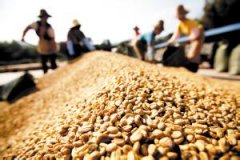
High-quality coffee bean producing countries introduce Cuban coffee
According to records, there were 2067 coffee plantations in Cuba in 1833. Among them, the earliest seven coffee plantation sites, such as Raglan Piedra, Elkovre, El Salvador and Nisto Perez, are listed as World Cultural Heritage. These seven coffee plantations are located in the foothills of Maestra in the provinces of Santiago and Guantanamo in southeastern Cuba in the 19th century (figure 17 is a postcard).

Yega Xuefi (yirgacheffe) and Harald (harrar)
Yirgacheffe and Harald (harrar), friends who know coffee must be familiar with it. Although they all come from Ethiopia, they have very different styles due to differences in regional microclimate and different treatment methods. Sheffield has a vibrant lightness and playfulness, while Harald has a profound heritage and appears to be mature and calm.

Global coffee producing area-Cuba
According to records, there were 2067 coffee plantations in Cuba in 1833. Among them, the earliest seven coffee plantation sites, such as Raglan Piedra, Elkovre, El Salvador and Nisto Perez, are listed as World Cultural Heritage. These seven coffee plantations are located in the foothills of Maestra in the provinces of Santiago and Guantanamo in southeastern Cuba in the 19th century (figure 17 is a postcard).